



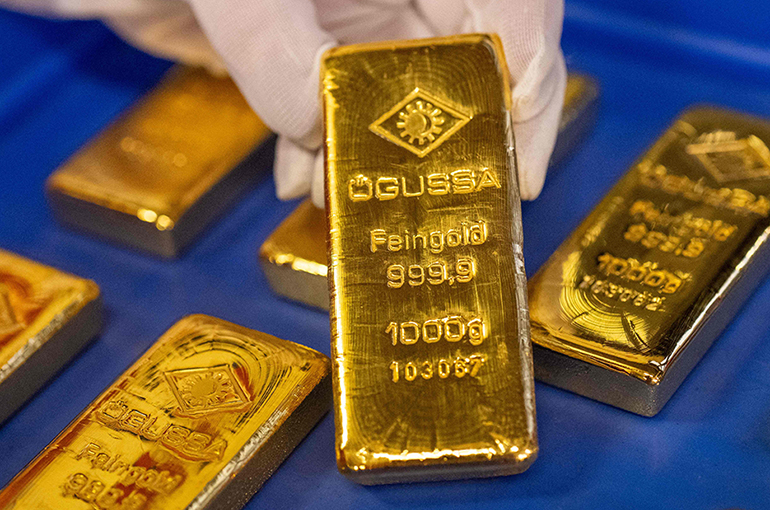
 China's Gold Purchases Hit Nearly Two-Year High as Central Bank Extends Buying Streak to 24 Months
(Yicai) Nov. 9 -- China's central bank increased its gold reserves for the 24th consecutive month in October, making its biggest monthly purchase in nearly two years as it seeks to diversify its reserve assets amid heightened global uncertainty.
The People's Bank of China added 830,000 ounces of gold last month, bringing its total holdings to 78.3 million ounces, according to the latest data. The increase was the largest since it resumed purchases in November 2024.
The acceleration came as international gold prices retreated, giving the central bank an opportunity to expand its holdings despite prices remaining historically elevated. Analysts said growing geopolitical and economic risks have strengthened the case for increasing gold's share of China's international reserves.
The PBOC is likely to continue accumulating gold to reduce risks associated with foreign currency assets, bolster the resilience of its reserves, and support the internationalization of the yuan, analysts said.
Global Uncertainty Drives Gold Buying
China's sustained gold purchases reflect a broader trend among central banks worldwide.
According to the World Gold Council's third-quarter 2026 report, central banks and other official institutions worldwide increased their gold holdings by a net 321 tons in the quarter, up 42 percent from a year earlier and the largest quarterly increase since the fourth quarter of 2024.
Reserve diversification and risk management remained the main drivers of central bank gold purchases, the report said. Global central banks bought 675 tons of gold in the first nine months of the year, 6 percent more than in the same period last year.
Wang Qing, chief macro analyst at Golden Credit Rating International, said the fundamental reason behind the PBOC's 24-month buying streak is the shift in the global political and economic landscape since the current US administration took office.
Although gold prices remain high, the need to increase holdings has grown from the perspective of optimizing the country's international reserve structure, Wang said.
Pang Ming, a member of the China Chief Economists Forum, said the sustained purchases reflect the PBOC's policy of continuously improving the composition of its international reserve assets.
With considerable uncertainty persisting in the global economic and financial environment, gold serves as both a safe-haven investment and a reserve asset, providing an effective hedge against risks associated with foreign currency holdings, Pang said. Increasing gold reserves can help diversify China's international assets and strengthen the stability and resilience of its overall reserve portfolio, he added.
Gold Price Retreat Spurs Purchases
The PBOC's sharp increase in gold purchases came during a correction in international bullion prices. London spot gold fell 6.8 percent in October from a year earlier, marking a second consecutive month of declines, according to the original report.
The central bank has increased the amount of gold it purchases for eight consecutive months, Wang pointed out.
The Federal Reserve's reported resumption of interest rate hikes in September, two consecutive months of sharp declines in international gold prices through October, and mounting concerns about the fiscal sustainability of developed economies, including the United States, Europe, and Japan, may have prompted the PBOC to accelerate its purchases last month, Wang said.
Gold accounted for 27 percent of total reserve assets held by central banks worldwide at the end of 2025, up from 20 percent a year earlier, according to data released by the European Central Bank in June.
Wang said the figures suggest that gold still accounts for a relatively small share of China's reserves, leaving considerable room for further purchases.
Gold is also widely accepted globally as an ultimate means of payment, Wang noted. By increasing its gold holdings, the PBOC can strengthen confidence in China's sovereign currency and create favorable conditions for the steady internationalization of the yuan, he said. Taking these factors into account, the central bank is likely to maintain its broader policy of increasing gold reserves, Wang added.
China's foreign exchange reserves rose to USD3.41 trillion at the end of October, an increase of USD4.9 billion from the end of September.
Against a complex and rapidly changing external backdrop, ample foreign exchange reserves and a more diversified gold reserve structure will help safeguard China's financial security, Pang said. They will also continue to support the basic stability of the yuan's exchange rate at a reasonable and balanced level, he added.
Editor: Emmi Laine